Analytics System
End-to-end analytics and LMS platform spanning Unity telemetry, web reporting, admin tooling and database layers.
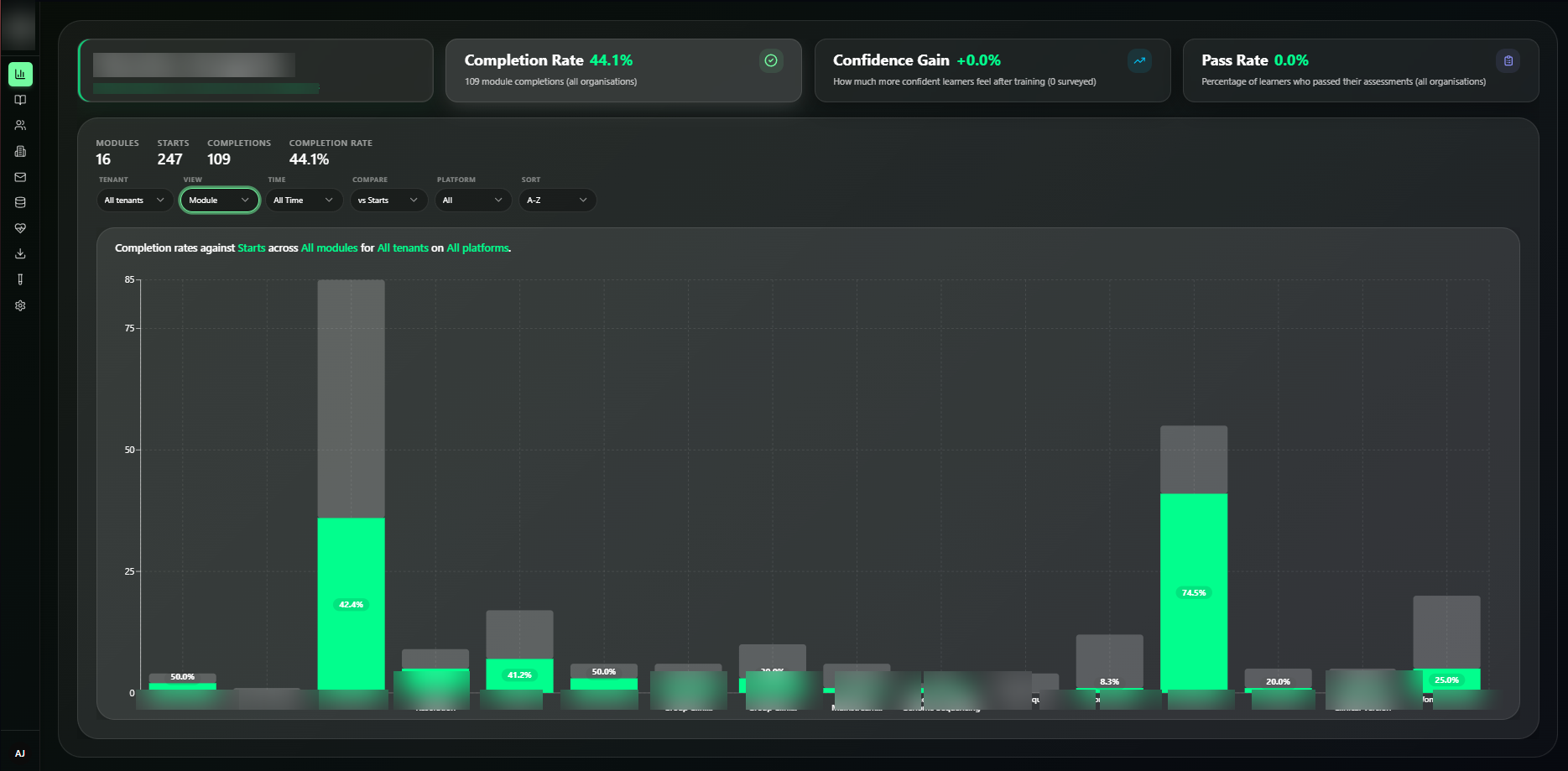
This is the most substantial project I have completed to date. I built a combined analytics and LMS platform so clients could manage training, track learner engagement, and get both quantitative and qualitative evidence of training impact.
On the product side it spans Unity telemetry, xAPI ingestion, derived analytics, web dashboards, tenant management, module management and the surrounding admin tooling needed to keep the data trustworthy. It supports multiple app types, including 360, Surgery VR and VR Specialist.
What I built
- A durable xAPI ingestion path with API-key auth, rate limiting, batch staging, deduplication and asynchronous processing.
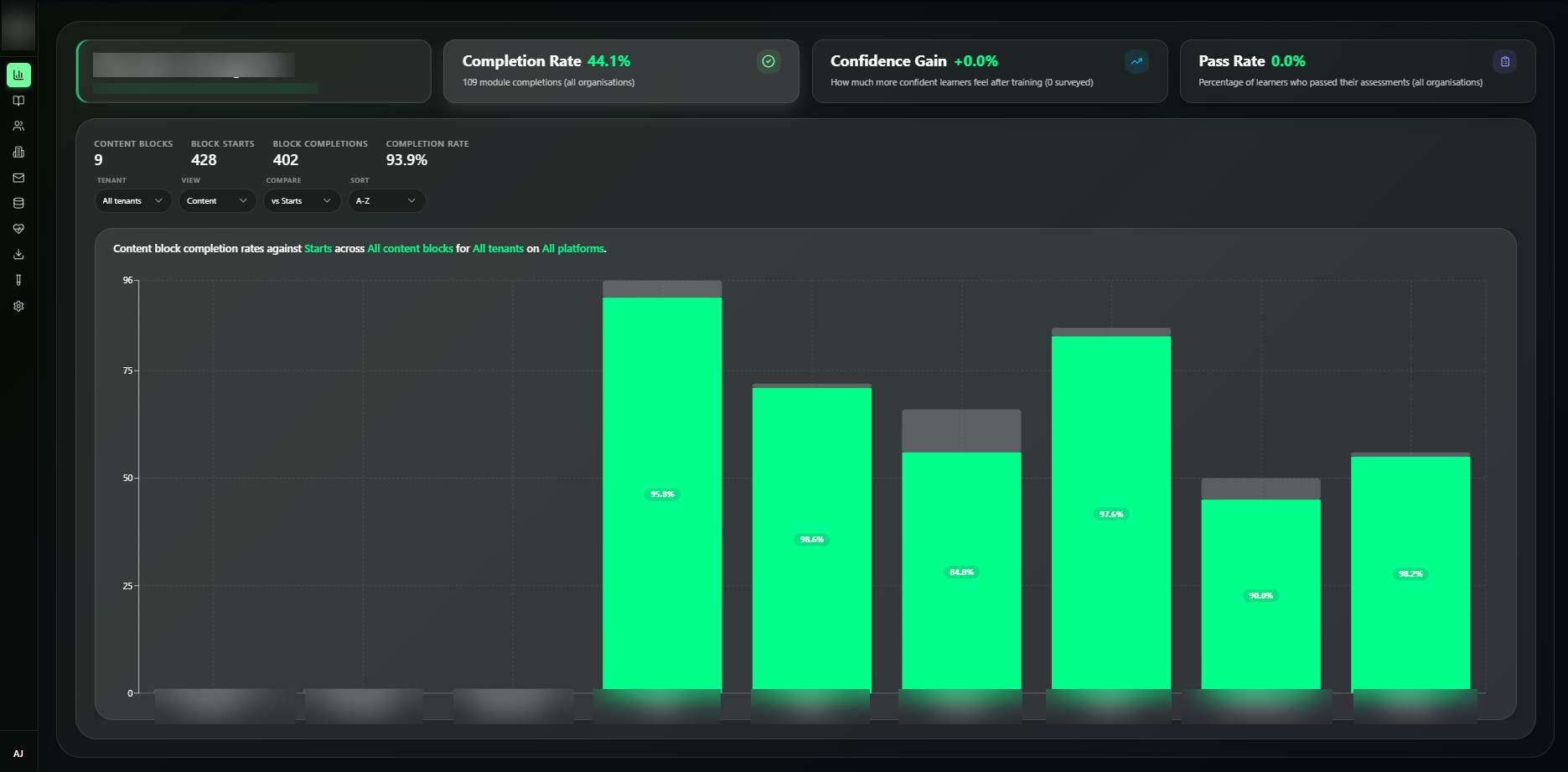
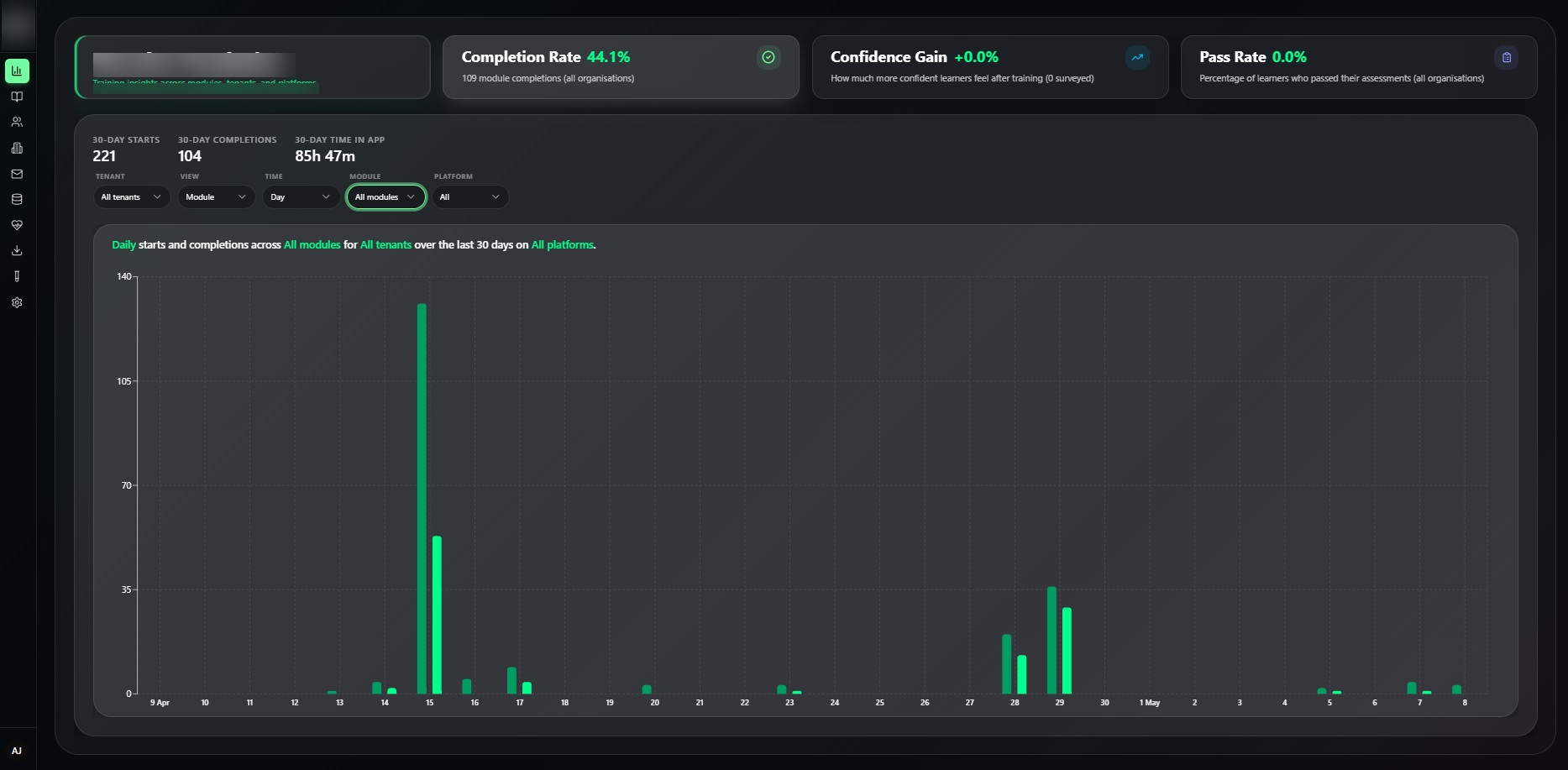
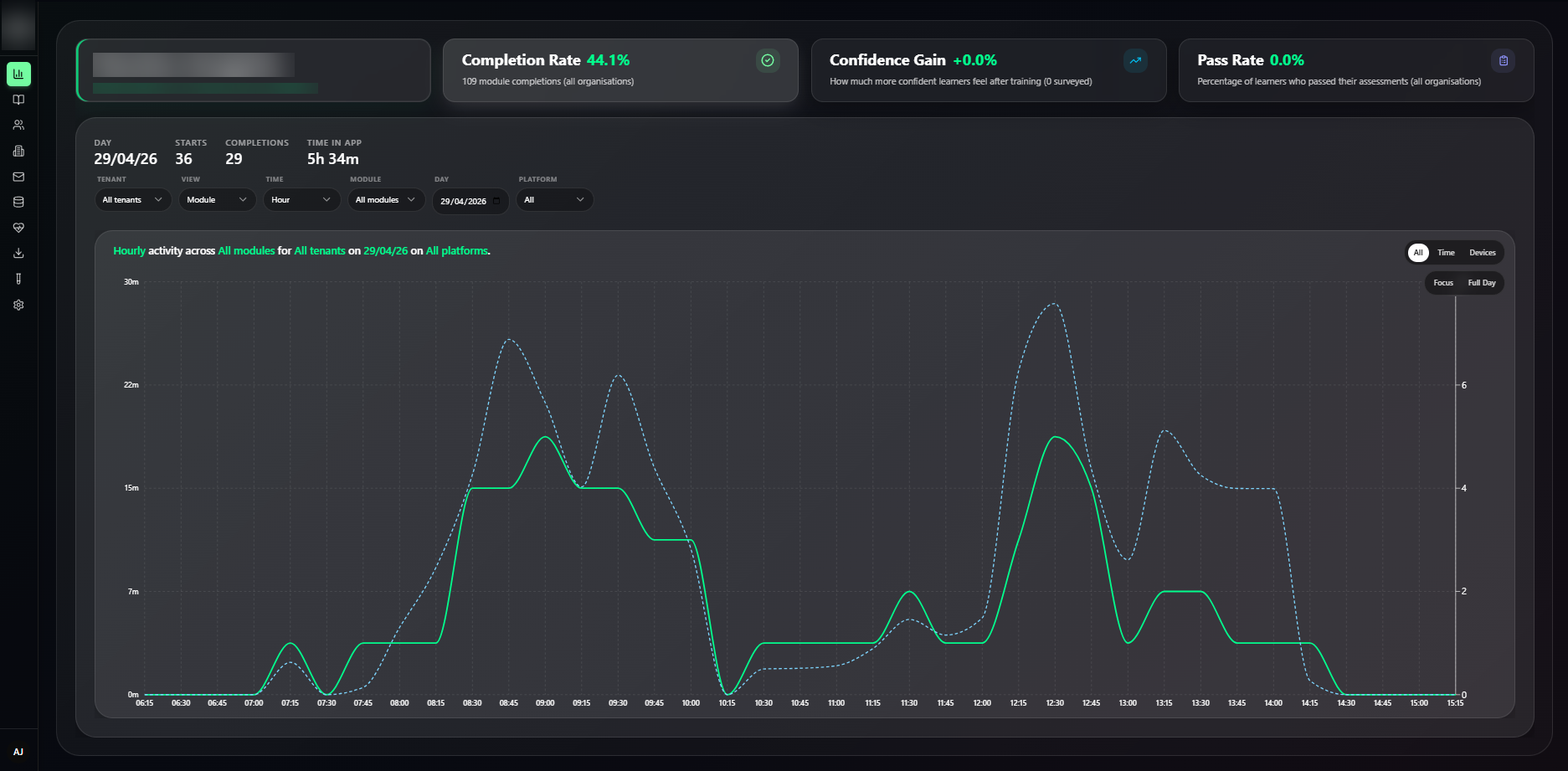
- Multi-tenant analytics dashboards covering starts, completions, confidence, daily usage, hourly usage and content-block progression.
- Tenant-level metric subscriptions and module visibility controls so each client only sees the reporting relevant to them.
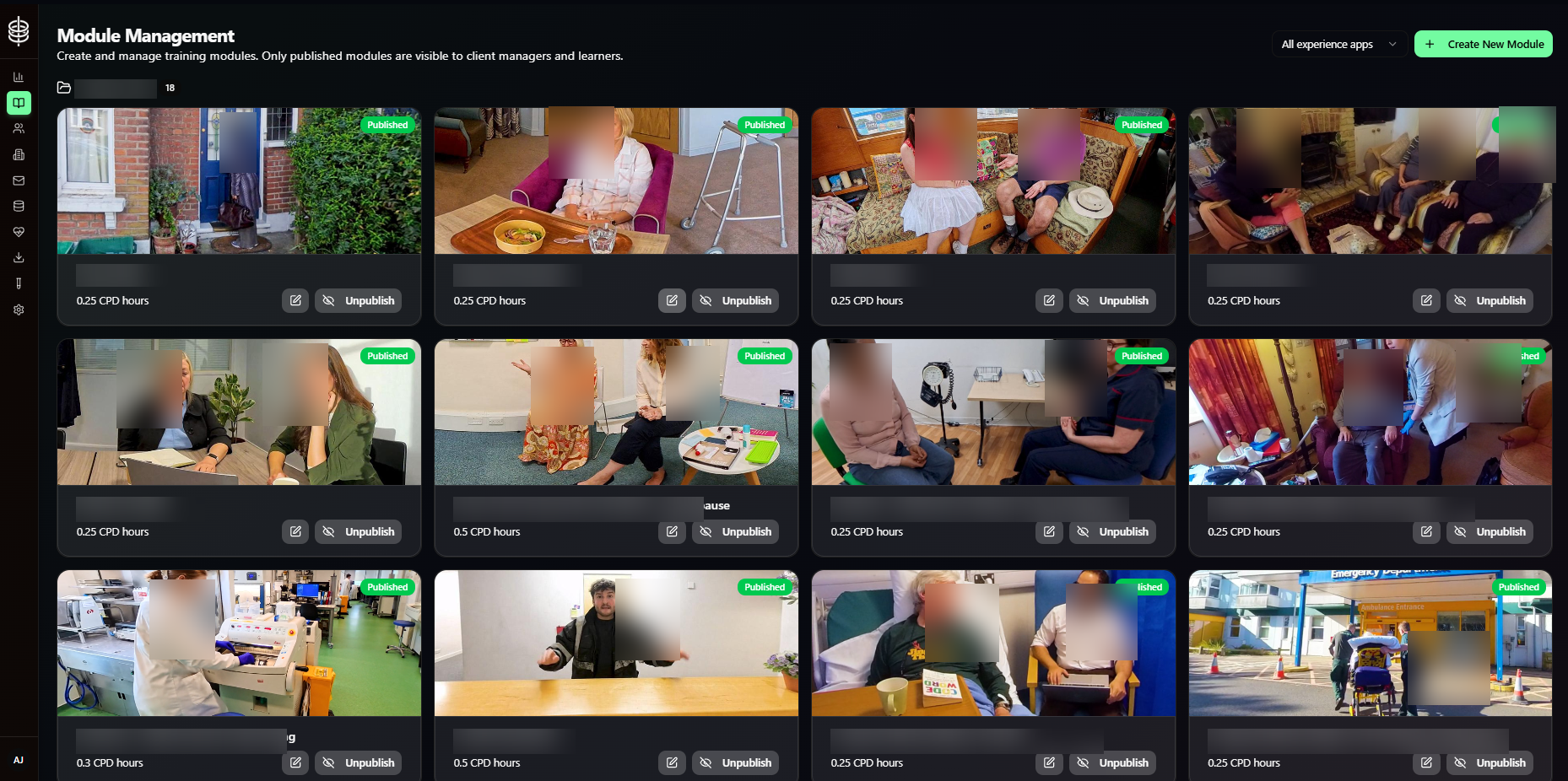
- Learning Hub admin tooling for modules, publishing, tenant setup, unlocks and Unity/WebGL or Android manifest generation.
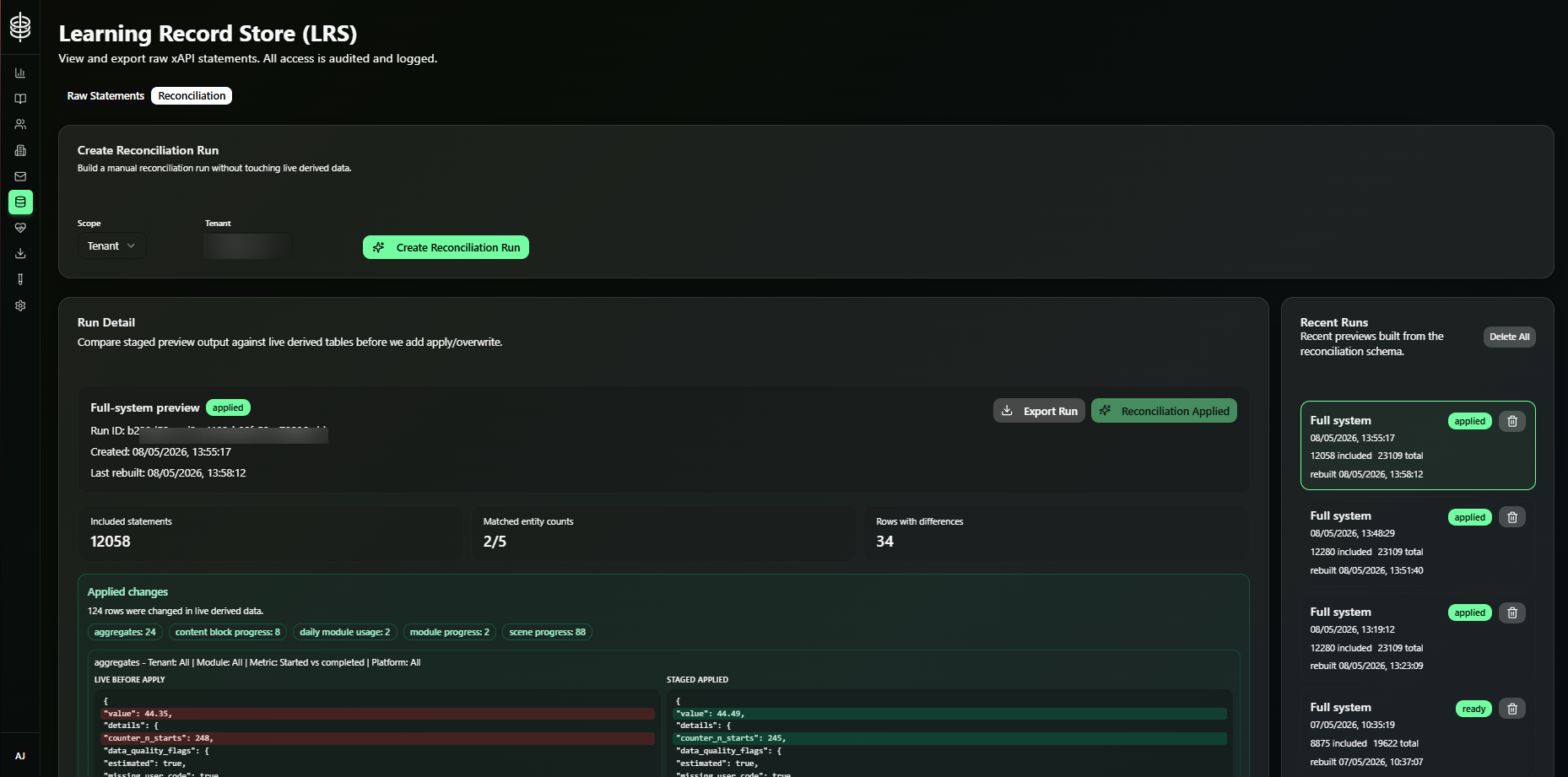
- LRS inspection and reconciliation tooling so raw statements could be reviewed, replayed, compared and repaired safely when derived data needed checking.
The screenshots below are redacted versions of the real product. Names and other sensitive details have been removed.
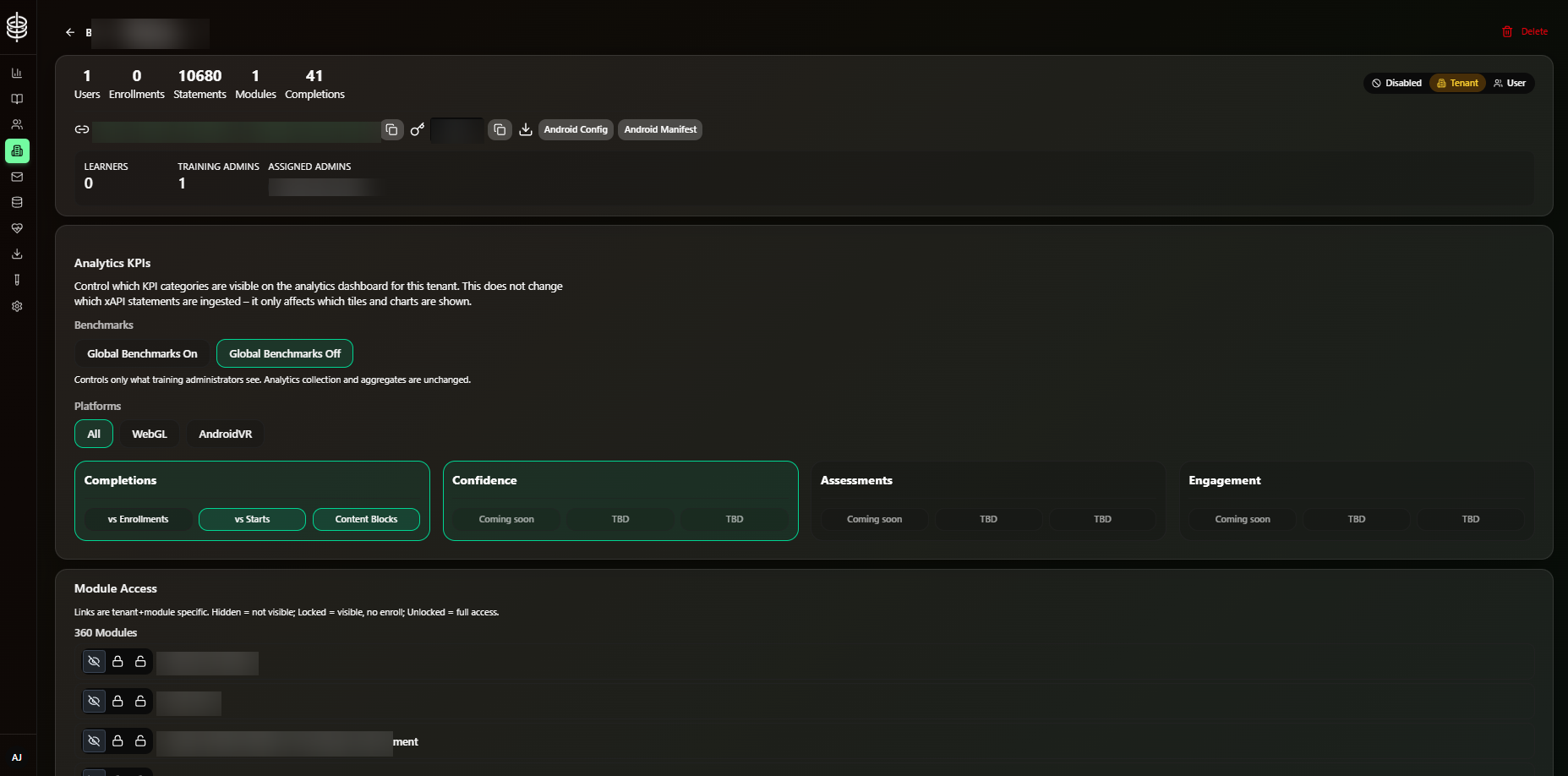
Supporting admin and data tooling
The project was not just a set of charts. A large part of the work was building the surrounding systems that made the reporting usable in production: tenant management, module operations, raw data inspection and reconciliation.
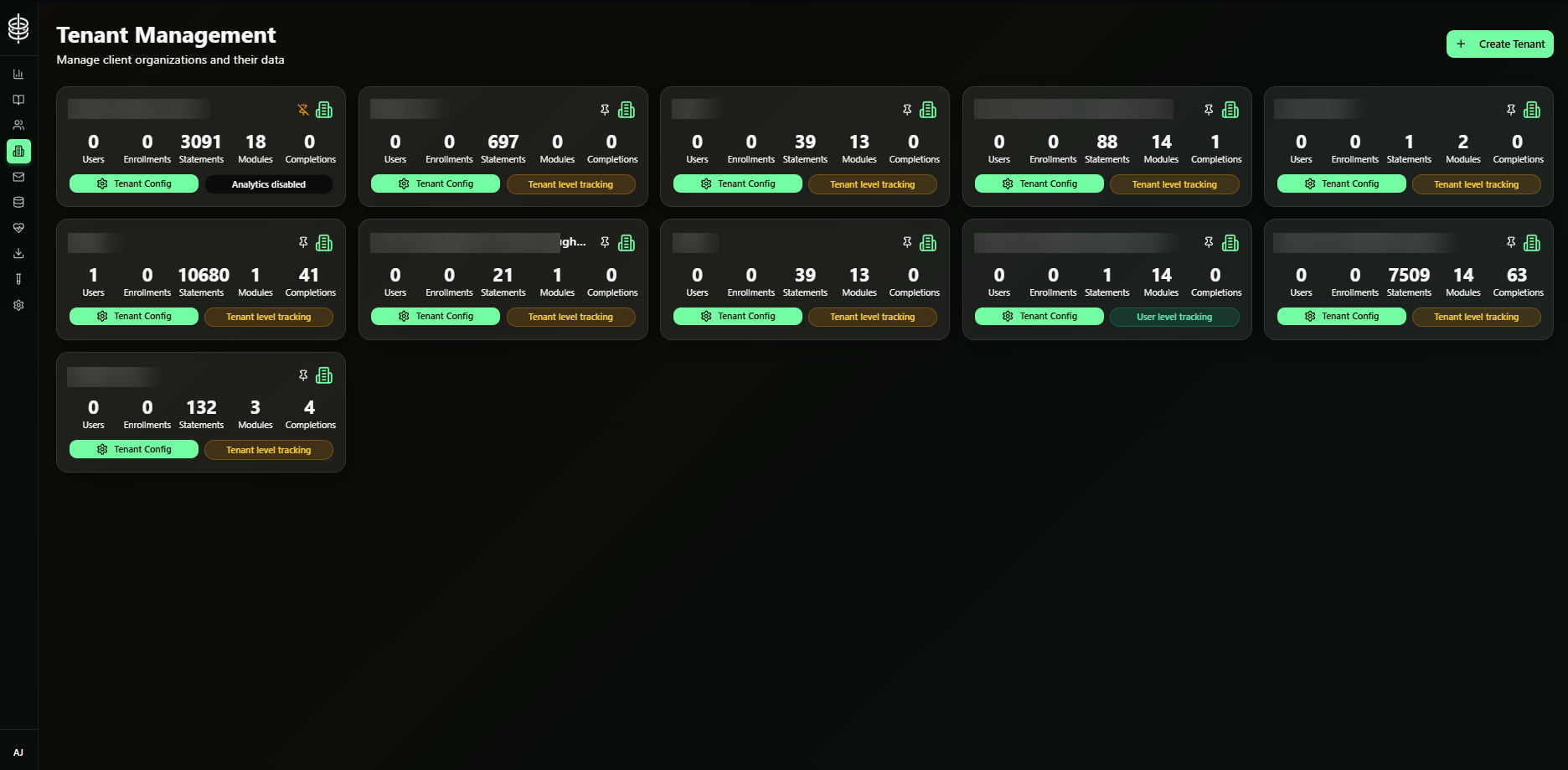
The module management screen shows that the analytics work sat alongside the wider content administration flow, not as an isolated dashboard but as part of a broader product operations toolset.
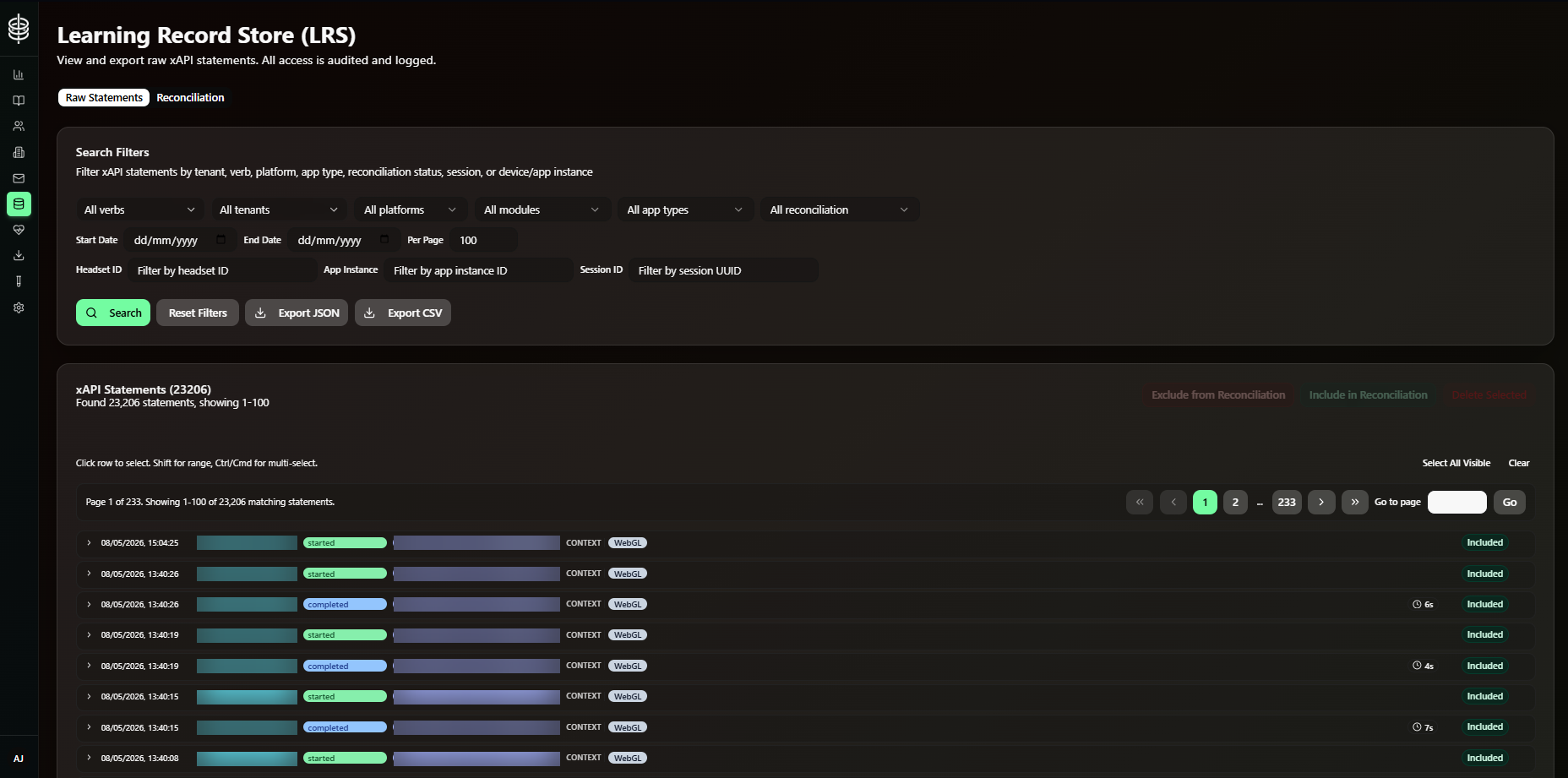
This work mattered because it gave the business and its clients a much clearer view of what training was actually doing. It also pushed me hard on web engineering, data modelling, analytics design and production-scale problem solving well beyond my original game-dev starting point in 2020.